Dear traveller,
There are certain cities that encourage you to write by hand.
Lausanne is one of them.
Perhaps it is the slope of the place, the way the streets seem to rise and fall as though arranged for thought rather than convenience. Perhaps it is the lake, which has the good manners not to shout for attention, but to remain quietly, undeniably beautiful in the background. Or perhaps it is simply that Lausanne belongs to that increasingly endangered class of places which still make one want to pause, sit down, and address another person properly.
Not text them. Not “drop them a quick line.” Address them.
One does not feel like sending a hurried message from Lausanne. One feels like choosing a postcard.
This, of course, is an old instinct now. The handwritten postcard has been pushed to the outer edges of modern travel, where it survives mostly as novelty or sentiment. We buy them in brighter moods than we send them. We admire them in racks. We turn them over. We imagine ourselves as the sort of person who writes them. And then, far too often, we do not.
A pity, really.
Because the postcard, when done properly, was never just a scrap of holiday administration. It was a small act of style. A declaration that one had gone somewhere worth describing, and thought enough of another person to let them in on the atmosphere of it. It was not meant to be efficient. It was meant to carry a trace of place. The picture on the front, the slightly hurried hand, the mention of weather, lunch, bells, trains, flowers, a view from a terrace — all of it combined to form something rather more intimate than the sterile speed of a modern message.
And Lausanne, dear reader, is exactly the sort of city that deserves such treatment.
You might begin near the lake, where the light has a way of making everything look faintly considered. The boats move without fuss. The cafés seem to understand proportion. The water does not glitter so much as glow. It is entirely possible, standing there, to feel the old postcard instinct returning to you. Not because the scene is grand in an obvious way, but because it is composed. It has edges worth framing. It asks to be sent.
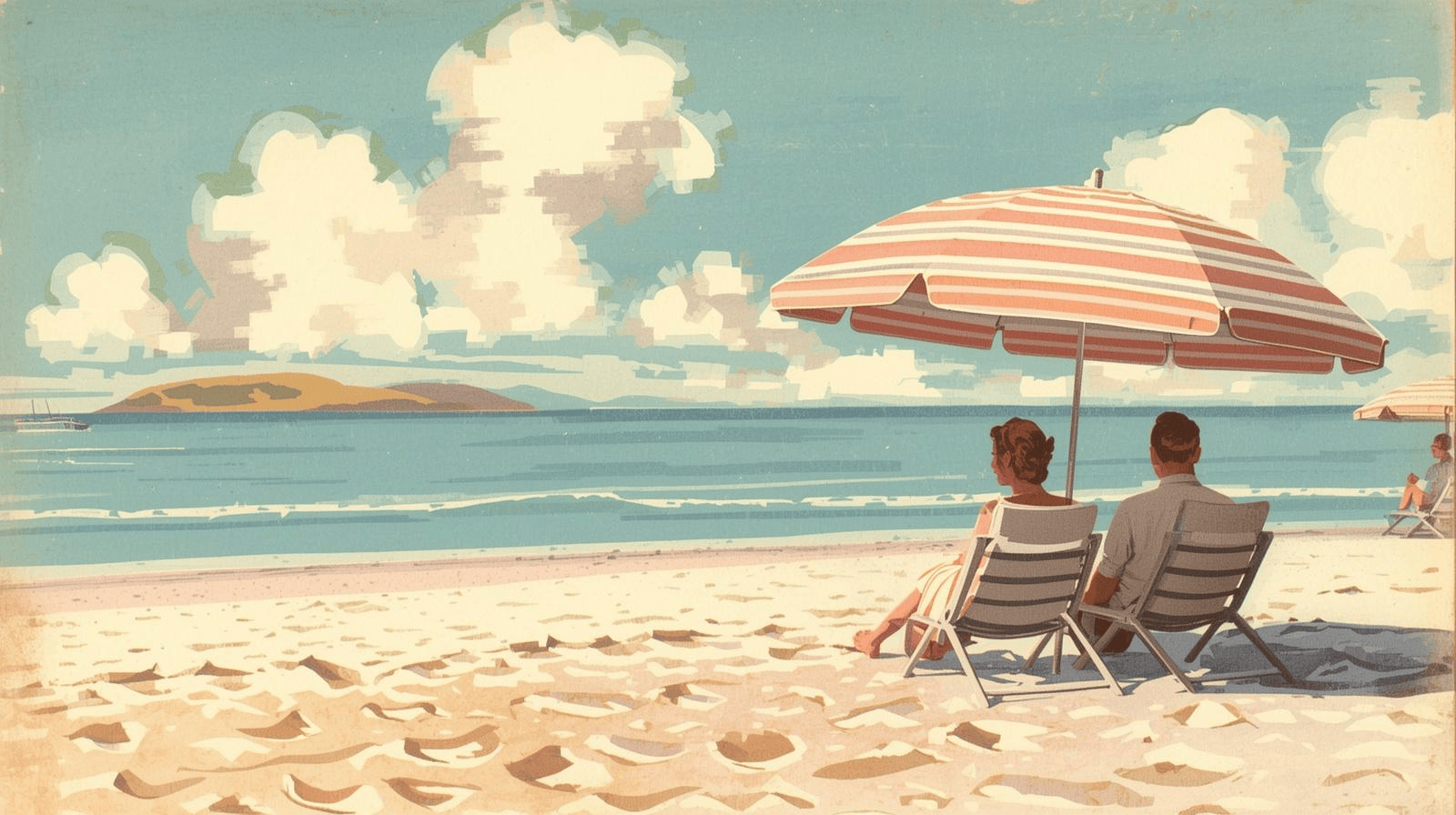
You may find yourself imagining the front of the card already: Ouchy in soft afternoon light, perhaps, with the lake beyond and the Alps behaving beautifully in the distance. Or a neat view over terracotta roofs and church spires, with the city rising above the shoreline as though layered by a particularly tasteful illustrator. Lausanne does not merely offer views. It offers postcard views in the original sense — those little arrangements of architecture, weather, and mood that seem to say, quite simply, wish you were here.
And yet the true charm of the handwritten postcard lies in the reverse.
It lies in that small blank space, never quite large enough, which forces you to distil a place into a few chosen lines. Not a full report. Not a performance. Just enough to convey that you have seen something lovely and thought to share it.
Lunch by the lake. Bells in the distance. A terrace full of white tablecloths. The railway up the hill. The flowers on the balcony. The extraordinary politeness of the morning.
What is remarkable is how much feeling can fit into so little room.
A postcard does not ask you to explain yourself at length. It asks you to notice. That may be why it feels so unfashionable now. Modern travel so often rewards proving and posting and documenting that it leaves little space for noticing quietly. A postcard belongs to a different rhythm. You write it after the coffee, not during. You choose your words because there are only a few lines left. You sit with the place long enough for it to settle into language.
Lausanne is made for this slower kind of attention.
It is a city of steps, terraces, lake breezes, church towers, and views that shift as you climb. It is full of those little pauses in which a person might reasonably decide to send a card. Not because anyone expects one, but because the day feels sufficiently good that it ought to be marked somehow. There is a difference, after all, between capturing a place and corresponding from it. The former says, I was here. The latter says, I thought of you while I was here. One is proof. The other is presence.
That is why postcards still matter.
Not because they are old, but because they resist the disposable quality of so much modern contact. A handwritten postcard must be chosen, written, stamped, and sent. It may arrive late. It may arrive after you do. It may even, charmingly, bear the marks of its journey. But that is part of its appeal. It has travelled too. It has crossed borders, sorting rooms, hands, and letterboxes. It carries not only your words, but the ceremony of having been sent.
There is something rather moving in that.
And there is something even more moving in receiving one.
To hold a postcard from Lausanne is to hold, in miniature, a mood. The lake. The light. The slight incline of the city. The fact that someone stood in a kiosk or a hotel lobby or near a little stationery stand and chose that exact image before thinking of you. In a time when so much communication vanishes into a scroll, the postcard remains stubbornly physical. It can be propped on a shelf. Slipped into a book. Found years later in a drawer. It outlasts the journey in a way very few travel messages now do.
Perhaps that is why the postcard feels so aligned with the Eldridge & Clements spirit.
It is not the fastest option. It is not the most practical. It is not even always the most reliable. But it is graceful. It asks for a little more thought, and gives a little more feeling in return. Like a proper train journey. Like dressing for dinner. Like writing somebody’s name in ink rather than tapping it out with your thumb while half-looking at a menu.
So should you find yourself in Lausanne, perhaps after a lakeside lunch or on a quiet afternoon when the bells have begun and the air has turned that elegant shade between gold and blue, consider this your encouragement to do something unfashionably lovely.
Buy the postcard.
Choose the stamp.
Write three or four decent lines.
Tell someone about the light on the water, or the climb up from the lake, or the way the city seems to hold itself with such calm assurance. Tell them you thought of them there. Tell them nothing of consequence at all, if you prefer. The charm lies partly in the triviality. A postcard does not need to be important. It only needs to be sent.
And in a world so determined to make everything immediate, there remains something deeply luxurious about a message that takes its time.
Yours, from the shore of Lake Geneva,
Eldridge & Clements
Leave a Reply